
Anodized Coating Thickness: A Practical Benchmark for Weatherproof Rooftop Solar Mounting Structures
September 07, 2026
Long-term rooftop solar performance depends on more than structural calculations and module quality. Aluminum mounting components are continuously exposed to rain, humidity, pollutants, temperature changes, and potentially corrosive environments. For commercial buyers, evaluating the anodized surface layer is therefore an important part of supplier qualification.
We recommend looking beyond a simple claim of “anodized aluminum” and examining coating specifications, testing methods, substrate quality, and application conditions before approving a rooftop solar mounting structure.
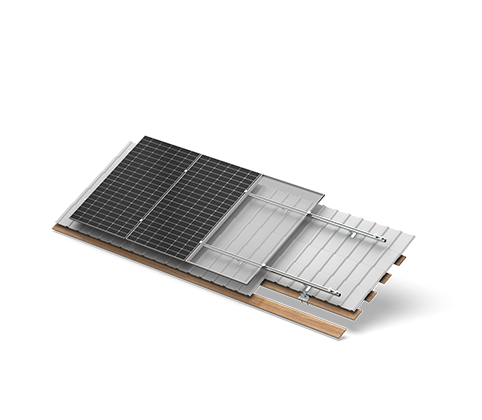
For rooftop solar applications, coating thickness should be treated as one part of a broader durability assessment. A thicker coating does not automatically guarantee superior field performance if the aluminum substrate, pretreatment, sealing, manufacturing consistency, or installation environment is unsuitable.
That distinction matters for procurement teams. Rather than accepting a generic thickness claim, buyers should request the specified coating grade, nominal or minimum thickness requirement, applicable test method, and quality-control records for the actual mounting components being supplied.
We therefore recommend establishing a project-specific acceptance range rather than selecting a supplier solely because its advertised number appears higher. Buyers should verify whether the stated thickness is an average, a minimum local value, or another defined measurement. They should also confirm how measurements are performed and recorded.
ISO 2128:2010 provides a non-destructive method for determining anodic oxidation coating thickness using a split-beam microscope. The standard is generally applicable to coatings above 10 μm, or above 5 μm when the surface is smooth.
This gives procurement teams a useful reference when reviewing a manufacturer's inspection methodology. A credible supplier should be able to explain not only the target coating specification but also how production samples are inspected against it.
The coating also needs to remain sufficiently continuous. ISO 2085:2018 provides a copper sulfate contact test for checking the continuity of thin anodic oxidation coatings below 5 μm or coatings that have been deformed. The standard is designed to identify local gaps that may expose bare aluminum.
For commercial projects, this reinforces the value of production quality control. Buyers should ask whether the manufacturer performs coating-thickness inspection, surface inspection, and other relevant tests as part of its manufacturing process.
Our independently developed ANTAI 6A22 aluminum alloy is engineered to achieve higher structural strength with improved material efficiency. According to our official product information, ANTAI 6A22 in T6 temper achieves a tensile strength of 300–335 MPa and a yield strength of 285–310 MPa.
These mechanical properties support mounting applications exposed to demanding environmental loads. We specifically developed the alloy to help our photovoltaic mounting systems address challenging conditions such as heavy snow and strong winds while supporting long-term structural stability.
For procurement teams, this illustrates why material selection should be evaluated alongside surface treatment. A weather-resistant mounting system needs a suitable combination of substrate properties, protective treatment, structural engineering, and manufacturing control rather than relying on one specification alone.
It is also useful to examine whether the supplier maintains in-house testing capabilities. Antaisolar's published quality-control information includes film-thickness testing, salt-spray testing, chemical-element testing, and other inspections across its aluminum production process. The company also states that its products undergo third-party certification and testing in different global regions.
Project teams should additionally evaluate whether the mounting design is appropriate for the roof type and local environmental conditions. Coating performance cannot compensate for an unsuitable structural design or poor installation practice.
At Antaisolar, we combine high-performance aluminum development with structural engineering and manufacturing quality control. Our ANTAI 6A22 alloy, with its published T6 mechanical properties, gives our rooftop mounting solutions a strong material foundation for demanding projects.
For commercial buyers, the best supplier is not simply the one offering the thickest coating. It is the manufacturer that can demonstrate a clearly defined specification, repeatable production quality, appropriate testing, suitable materials, and engineering support for the actual rooftop environment.
We recommend looking beyond a simple claim of “anodized aluminum” and examining coating specifications, testing methods, substrate quality, and application conditions before approving a rooftop solar mounting structure.
Why Anodized Coating Thickness Matters
Anodizing creates an anodic oxidation coating on aluminum, helping provide a protective surface while also affecting appearance and other surface characteristics. ISO 7599:2018 establishes a method for specifying protective and decorative anodic oxidation coatings and identifies characteristic properties, testing methods, and minimum performance requirements.For rooftop solar applications, coating thickness should be treated as one part of a broader durability assessment. A thicker coating does not automatically guarantee superior field performance if the aluminum substrate, pretreatment, sealing, manufacturing consistency, or installation environment is unsuitable.
That distinction matters for procurement teams. Rather than accepting a generic thickness claim, buyers should request the specified coating grade, nominal or minimum thickness requirement, applicable test method, and quality-control records for the actual mounting components being supplied.
How Buyers Should Benchmark Rooftop Solar Mounting Structure Coatings
There is no single anodized-layer thickness that can responsibly be labeled the universal standard for every solar roof. ISO 7599 focuses on how anodic coatings are specified and evaluated, while project requirements depend on factors such as aluminum alloy, exposure conditions, component geometry, and intended service environment.We therefore recommend establishing a project-specific acceptance range rather than selecting a supplier solely because its advertised number appears higher. Buyers should verify whether the stated thickness is an average, a minimum local value, or another defined measurement. They should also confirm how measurements are performed and recorded.
ISO 2128:2010 provides a non-destructive method for determining anodic oxidation coating thickness using a split-beam microscope. The standard is generally applicable to coatings above 10 μm, or above 5 μm when the surface is smooth.
This gives procurement teams a useful reference when reviewing a manufacturer's inspection methodology. A credible supplier should be able to explain not only the target coating specification but also how production samples are inspected against it.
Thickness Is Only One Part of Weather Resistance
A weatherproof rooftop solar mounting structure requires more than an adequate anodized layer. Aluminum alloy selection, mechanical strength, drainage, fastener compatibility, structural design, and installation quality all influence long-term reliability.The coating also needs to remain sufficiently continuous. ISO 2085:2018 provides a copper sulfate contact test for checking the continuity of thin anodic oxidation coatings below 5 μm or coatings that have been deformed. The standard is designed to identify local gaps that may expose bare aluminum.
For commercial projects, this reinforces the value of production quality control. Buyers should ask whether the manufacturer performs coating-thickness inspection, surface inspection, and other relevant tests as part of its manufacturing process.
Antaisolar Combines Material Strength With Surface Protection
At Antaisolar, we approach rooftop mounting performance from both material and structural perspectives. We have specialized in designing, manufacturing, and delivering high-performance rooftop solar mounting structures for projects worldwide.Our independently developed ANTAI 6A22 aluminum alloy is engineered to achieve higher structural strength with improved material efficiency. According to our official product information, ANTAI 6A22 in T6 temper achieves a tensile strength of 300–335 MPa and a yield strength of 285–310 MPa.
These mechanical properties support mounting applications exposed to demanding environmental loads. We specifically developed the alloy to help our photovoltaic mounting systems address challenging conditions such as heavy snow and strong winds while supporting long-term structural stability.
For procurement teams, this illustrates why material selection should be evaluated alongside surface treatment. A weather-resistant mounting system needs a suitable combination of substrate properties, protective treatment, structural engineering, and manufacturing control rather than relying on one specification alone.
What to Request During Supplier Qualification
When evaluating solar mounting manufacturers, commercial buyers should request documentation that allows specifications to be compared consistently. Start with the aluminum alloy designation and mechanical-property data. Then review the anodizing specification, required coating thickness, applicable test method, and inspection frequency.It is also useful to examine whether the supplier maintains in-house testing capabilities. Antaisolar's published quality-control information includes film-thickness testing, salt-spray testing, chemical-element testing, and other inspections across its aluminum production process. The company also states that its products undergo third-party certification and testing in different global regions.
Project teams should additionally evaluate whether the mounting design is appropriate for the roof type and local environmental conditions. Coating performance cannot compensate for an unsuitable structural design or poor installation practice.
Making Coating Data Part of Procurement Decisions
Anodized coating thickness is a valuable technical indicator when vetting a rooftop solar mounting structure, but it should never be isolated from the rest of the engineering assessment. International standards provide methods and frameworks for specifying and measuring anodic coatings, while project conditions determine the appropriate requirements.At Antaisolar, we combine high-performance aluminum development with structural engineering and manufacturing quality control. Our ANTAI 6A22 alloy, with its published T6 mechanical properties, gives our rooftop mounting solutions a strong material foundation for demanding projects.
For commercial buyers, the best supplier is not simply the one offering the thickest coating. It is the manufacturer that can demonstrate a clearly defined specification, repeatable production quality, appropriate testing, suitable materials, and engineering support for the actual rooftop environment.
end