
Ground Mounted Solar Systems: From Small Arrays to Multi-GW Solar Plants
September 17, 2026
Solar power has progressed from modest ground-mounted installations to utility-scale projects measured in hundreds of megawatts and multiple gigawatts. This evolution has not simply meant adding more panels. It has changed how developers approach land, structures, foundations, tracking, construction, grid connection, and operations. The ground mounted solar system has evolved as engineering adapts to larger and more demanding project requirements.
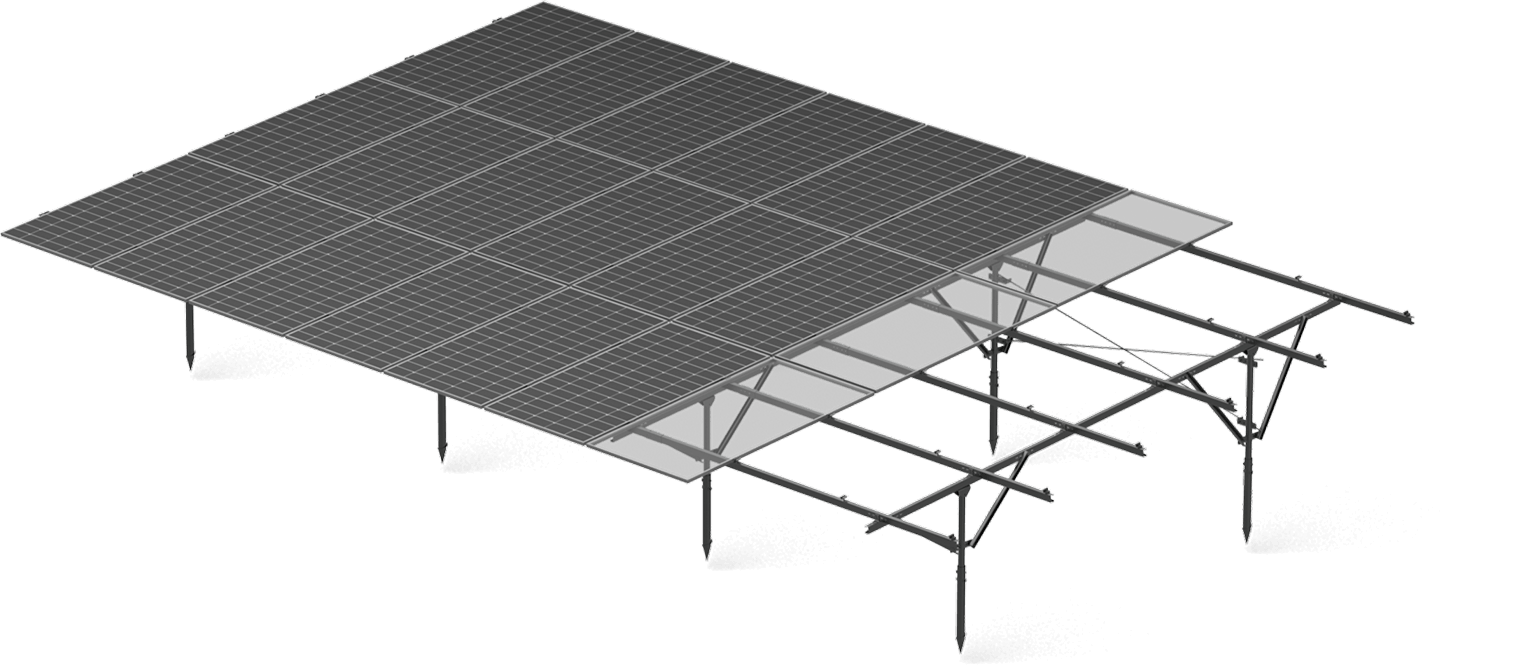
A ground mounted solar system must support modules over decades while responding to site-specific wind, snow, corrosion, terrain, and foundation conditions. The U.S. Department of Energy notes that PV mounting structures need to withstand wind, rain, hail, and corrosion over long service periods. Structural engineering is central to reliability.
For project teams, higher module power affects more than procurement. Module dimensions, row configuration, electrical design, transportation, equipment, and structural loading must be considered together. A ground solar mounting design needs to evolve alongside the modules it supports.
Tracking also introduces engineering trade-offs. Rows need appropriate spacing to limit self-shading as modules move, while drive systems and controls add mechanical and operational requirements. These considerations mean developers must evaluate energy gains alongside structural, land-use, and maintenance requirements.
At this scale, ground solar mounting must support repeatable installation while accommodating site variability. Foundation selection may involve driven piles, ground screws, concrete foundations, or other approaches depending on geotechnical conditions. Standardized components can improve installation efficiency, but customization remains important when terrain or soil conditions change.
Scale also makes land-use efficiency increasingly important. Yet total project footprint still depends on technology, layout, terrain, setbacks, access roads, and other infrastructure. Larger capacity therefore does not eliminate careful land planning. Research has shown that utility-scale PV power and energy densities have improved over time.
This creates additional requirements for mounting design. Clearance, row arrangement, equipment access, crop light conditions, and environmental exposure can become important parameters. Developers need solutions aligned with a site's operational objectives.
Procurement should begin with project conditions rather than a generic product list. Buyers can compare suppliers based on engineering capabilities, project experience, manufacturing consistency, documentation, quality control, and their ability to adapt designs to different sites. This becomes increasingly important as project capacity grows.
Our Agri-PV solutions include adjustable structures for greenhouses, orchards, and crop fields. We offer individual-array and integrated-array approaches according to application needs. Our official project references include agrivoltaic installations from 80 kW to 5 MW, alongside larger recent projects, demonstrating applications across different scales.
The evolution of ground-mounted solar has been driven by better modules, improved tracking, stronger engineering, industrialized construction, and smarter land-use strategies. From simple fixed racks to multi-GW power plants, every increase in scale has raised expectations for structural performance and project integration.
For us, the next stage is not simply about building larger arrays. It is about making ground-mounted PV more adaptable to land, climate, agriculture, and project economics. As utility-scale development continues to expand, well-engineered ground solar mounting will remain a foundation for turning available land into reliable, scalable clean-energy infrastructure.
From Simple Racks to Engineered Solar Infrastructure
Early ground-mounted PV projects were comparatively straightforward. Fixed-tilt racks held modules at a selected angle, while foundations provided resistance against wind and other site loads. As project sizes increased, the mounting structure became critical infrastructure rather than a simple support frame.A ground mounted solar system must support modules over decades while responding to site-specific wind, snow, corrosion, terrain, and foundation conditions. The U.S. Department of Energy notes that PV mounting structures need to withstand wind, rain, hail, and corrosion over long service periods. Structural engineering is central to reliability.
Higher Module Power Changed Project Design
Module technology has been a major driver behind utility-scale PV growth. Higher-wattage modules allow developers to install more DC capacity with fewer individual modules for the same plant size. Lawrence Berkeley National Laboratory research found that utility-scale PV power density increased substantially between 2011 and 2019, driven partly by higher module wattage and efficiency.For project teams, higher module power affects more than procurement. Module dimensions, row configuration, electrical design, transportation, equipment, and structural loading must be considered together. A ground solar mounting design needs to evolve alongside the modules it supports.
The Shift from Fixed Tilt to Tracking
Fixed-tilt systems remain useful, but single-axis tracking has become an important option for many utility-scale plants. Tracking mechanisms adjust module orientation to follow the sun, potentially increasing energy production compared with a fixed orientation. The DOE identifies tracking as an application for ground-mounted PV arrays.Tracking also introduces engineering trade-offs. Rows need appropriate spacing to limit self-shading as modules move, while drive systems and controls add mechanical and operational requirements. These considerations mean developers must evaluate energy gains alongside structural, land-use, and maintenance requirements.
Scaling Construction for Hundreds of Megawatts
At hundreds of megawatts, construction becomes an exercise in industrial-scale coordination. Developers must evaluate land availability, topography, transmission access, interconnection costs, permitting, environmental impacts, and community considerations. The DOE defines large-scale solar as generally exceeding 1 MW and highlights these factors in site selection.At this scale, ground solar mounting must support repeatable installation while accommodating site variability. Foundation selection may involve driven piles, ground screws, concrete foundations, or other approaches depending on geotechnical conditions. Standardized components can improve installation efficiency, but customization remains important when terrain or soil conditions change.
Multi-GW Plants Bring a New Level of Complexity
Multi-GW plants represent a broader change in project management. Vast numbers of modules must operate as an integrated generating asset, with mounting, electrical equipment, roads, drainage, communications, and operations planned as one system.Scale also makes land-use efficiency increasingly important. Yet total project footprint still depends on technology, layout, terrain, setbacks, access roads, and other infrastructure. Larger capacity therefore does not eliminate careful land planning. Research has shown that utility-scale PV power and energy densities have improved over time.
New Ground-Mount Applications Expand the Opportunity
Ground-mounted PV is also moving beyond conventional utility sites. Developers are examining land that can support more than one productive use. Agrivoltaics is a prominent example, combining solar generation with agricultural activity. NREL research describes configurations that allow the same land to support both energy and agricultural production, although designs differ in farming compatibility.This creates additional requirements for mounting design. Clearance, row arrangement, equipment access, crop light conditions, and environmental exposure can become important parameters. Developers need solutions aligned with a site's operational objectives.
What the Evolution Means for Buyers
For business buyers, the evolution of the ground mounted solar system changes how mounting solutions should be evaluated. Material cost is only one consideration. Structural reliability, foundation compatibility, installation efficiency, logistics, corrosion protection, maintenance access, and adaptability can all influence project economics over the asset's life.Procurement should begin with project conditions rather than a generic product list. Buyers can compare suppliers based on engineering capabilities, project experience, manufacturing consistency, documentation, quality control, and their ability to adapt designs to different sites. This becomes increasingly important as project capacity grows.
Engineering the Next Generation of Ground-Mounted PV
We at Antaisolar approach ground-mounted PV as an engineered system designed around project requirements. Our ground mounting portfolio is developed for large-scale PV applications, with pre-assembled designs, corrosion-resistant materials, and customized engineering for different terrain and project complexity. We also provide Agri-PV solutions designed to combine solar generation with agricultural use.Our Agri-PV solutions include adjustable structures for greenhouses, orchards, and crop fields. We offer individual-array and integrated-array approaches according to application needs. Our official project references include agrivoltaic installations from 80 kW to 5 MW, alongside larger recent projects, demonstrating applications across different scales.
The evolution of ground-mounted solar has been driven by better modules, improved tracking, stronger engineering, industrialized construction, and smarter land-use strategies. From simple fixed racks to multi-GW power plants, every increase in scale has raised expectations for structural performance and project integration.
For us, the next stage is not simply about building larger arrays. It is about making ground-mounted PV more adaptable to land, climate, agriculture, and project economics. As utility-scale development continues to expand, well-engineered ground solar mounting will remain a foundation for turning available land into reliable, scalable clean-energy infrastructure.
end