
Leak Prevention Requirements Achieved by Commercial Solar Roof Racking Manufacturers
September 01, 2026
Commercial rooftop solar projects must balance energy generation, structural safety, installation efficiency, and long-term roof protection. For building owners, a mounting system that performs well mechanically but creates avoidable waterproofing risks can become an expensive liability. That is why selecting capable solar mounting manufacturers requires more than comparing material, price, or installation speed. Roof compatibility, penetration management, drainage, fire performance, and project-specific engineering all deserve attention.
A commercial roof is part of the building envelope, so any photovoltaic installation must preserve its ability to control water. Poorly designed attachments, damaged membranes, incorrectly sealed penetrations, or blocked drainage paths can allow moisture to reach insulation, decking, equipment, and interior spaces.
FM Global's current guidance for roof-mounted PV specifically addresses roof penetrations, expansion joints, roof-cover protection, drainage, and array layout. It also notes that excessive snow and rainwater accumulation, particularly where PV systems interfere with drainage, can contribute to roof damage.
For commercial buyers, this means leakage prevention should be considered at the design stage rather than treated as a maintenance issue after installation.
For example, IEC 62548-1 establishes design requirements for PV arrays, including mounting-structure provisions, wiring, electrical protection, switching, and earthing. The current consolidated edition incorporates the 2025 amendment.
UL 2703 is another important reference in markets where it applies. UL Solutions explains that the standard covers PV mounting systems, mounting devices, clamping devices, and grounding components, while also evaluating rooftop PV fire classification as part of the complete module-and-racking installation.
These standards do not replace proper roofing practice. Instead, they form part of a broader compliance framework that manufacturers, engineers, installers, and building owners must evaluate together.
For penetrative systems, attachment locations and sealing details need to be coordinated carefully with the roof assembly. For non-penetrating or specialized systems, designers must still consider wind loads, friction, ballast, drainage, and the condition of the existing roof.
FM Global also recommends protecting roof-cover surfaces beneath PV pedestals from abrasion by using suitable roof-cover materials. This highlights an important principle: leakage prevention involves not only visible penetrations, but also protecting the roof membrane from mechanical damage during the system's service life.
Our patented SnapFit Click-in System is designed for efficient assembly and enables one-handed installation without compromising stability. The system uses an elastic-drive concept combining springs, aluminum, and plastic spacers to simplify connections between mounting components. For C&I applications, Antaisolar states that SnapFit can reduce installation time by up to 50% compared with conventional methods for projects of identical scale and crew size.
Faster installation can support better project productivity, but we believe speed should never come at the expense of roof integrity. Our approach combines pre-assembled components, application-specific roof solutions, and structural design considerations to support reliable commercial deployment.
Third, request documentation showing relevant testing, certifications, installation instructions, and material information. UL emphasizes that the specific rack system, components, modules, listing attributes, and installation instructions all matter when determining compliance.
Finally, consider installation quality and technical support. Even a well-engineered mounting system can create problems when installed incorrectly. Clear procedures, project-specific engineering, and experienced technical assistance can therefore be as important as the hardware itself.
At Antaisolar, we provide rooftop mounting solutions for different roof structures, with product configurations and engineering support adapted to specific project requirements. By combining solutions for diverse roof types with our SnapFit Click-in System and project-oriented engineering approach, we help commercial solar stakeholders address practical installation challenges while maintaining a strong focus on roof protection and system reliability.
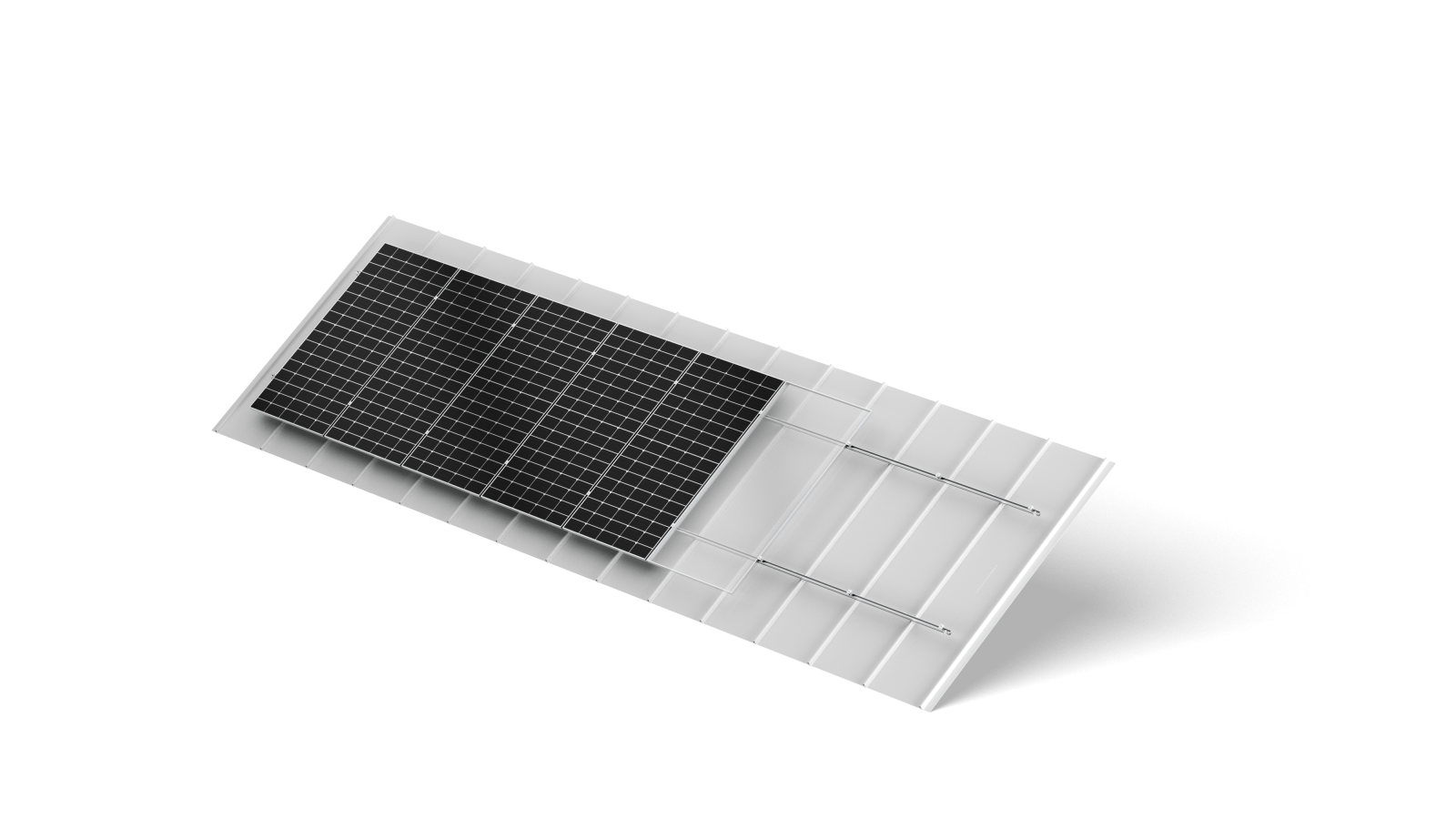
Why Roof Leakage Prevention Matters in Commercial Solar
A commercial roof is part of the building envelope, so any photovoltaic installation must preserve its ability to control water. Poorly designed attachments, damaged membranes, incorrectly sealed penetrations, or blocked drainage paths can allow moisture to reach insulation, decking, equipment, and interior spaces.FM Global's current guidance for roof-mounted PV specifically addresses roof penetrations, expansion joints, roof-cover protection, drainage, and array layout. It also notes that excessive snow and rainwater accumulation, particularly where PV systems interfere with drainage, can contribute to roof damage.
For commercial buyers, this means leakage prevention should be considered at the design stage rather than treated as a maintenance issue after installation.
What Standards Should Solar Mounting Manufacturers Consider?
There is no single international "leakage prevention standard" that applies identically to every commercial rooftop PV project. Requirements depend on the roof construction, country, building code, mounting method, and project conditions.For example, IEC 62548-1 establishes design requirements for PV arrays, including mounting-structure provisions, wiring, electrical protection, switching, and earthing. The current consolidated edition incorporates the 2025 amendment.
UL 2703 is another important reference in markets where it applies. UL Solutions explains that the standard covers PV mounting systems, mounting devices, clamping devices, and grounding components, while also evaluating rooftop PV fire classification as part of the complete module-and-racking installation.
These standards do not replace proper roofing practice. Instead, they form part of a broader compliance framework that manufacturers, engineers, installers, and building owners must evaluate together.
How Roof Design Reduces Water-Ingress Risk
The first priority for commercial solar mounting is matching the attachment method to the roof. Metal, tile, concrete, TPO, BIPV, and other roof constructions can have very different structural and waterproofing characteristics.For penetrative systems, attachment locations and sealing details need to be coordinated carefully with the roof assembly. For non-penetrating or specialized systems, designers must still consider wind loads, friction, ballast, drainage, and the condition of the existing roof.
FM Global also recommends protecting roof-cover surfaces beneath PV pedestals from abrasion by using suitable roof-cover materials. This highlights an important principle: leakage prevention involves not only visible penetrations, but also protecting the roof membrane from mechanical damage during the system's service life.
Antaisolar: Designing for Different Commercial Roof Conditions
At Antaisolar, we recognize that commercial rooftops are rarely identical. Our roof mounting systems provide secure, lightweight solutions for metal, tile, concrete, TPO, BIPV, and balcony applications. This broad compatibility allows project teams to select solutions according to the actual roof scenario rather than forcing one mounting approach onto every building.Our patented SnapFit Click-in System is designed for efficient assembly and enables one-handed installation without compromising stability. The system uses an elastic-drive concept combining springs, aluminum, and plastic spacers to simplify connections between mounting components. For C&I applications, Antaisolar states that SnapFit can reduce installation time by up to 50% compared with conventional methods for projects of identical scale and crew size.
Faster installation can support better project productivity, but we believe speed should never come at the expense of roof integrity. Our approach combines pre-assembled components, application-specific roof solutions, and structural design considerations to support reliable commercial deployment.
What Buyers Should Evaluate Before Selecting a Supplier
Commercial procurement teams should assess more than a manufacturer's product catalog. First, confirm whether the proposed mounting solution is compatible with the specific roof covering and attachment requirements. Second, review structural calculations for local wind, snow, seismic, and other applicable loads.Third, request documentation showing relevant testing, certifications, installation instructions, and material information. UL emphasizes that the specific rack system, components, modules, listing attributes, and installation instructions all matter when determining compliance.
Finally, consider installation quality and technical support. Even a well-engineered mounting system can create problems when installed incorrectly. Clear procedures, project-specific engineering, and experienced technical assistance can therefore be as important as the hardware itself.
Building a More Reliable Rooftop Solar Investment
Commercial solar buyers increasingly need mounting solutions that protect both energy assets and the buildings beneath them. Leakage prevention should therefore be evaluated alongside structural strength, fire performance, installation efficiency, roof compatibility, and long-term service requirements.At Antaisolar, we provide rooftop mounting solutions for different roof structures, with product configurations and engineering support adapted to specific project requirements. By combining solutions for diverse roof types with our SnapFit Click-in System and project-oriented engineering approach, we help commercial solar stakeholders address practical installation challenges while maintaining a strong focus on roof protection and system reliability.
end