
What Foundations Work Best for Solar Panel Vertical Mounting Systems?
September 20, 2026
A vertical solar array can make better use of constrained land, but its structural performance depends heavily on what happens below grade. For developers, EPC teams, and engineers, foundation choice is not simply a question of installation speed. Soil strength, groundwater, wind, snow, terrain, corrosion exposure, construction access, and lifecycle cost all influence the right foundation for a solar panel vertical mounting project.
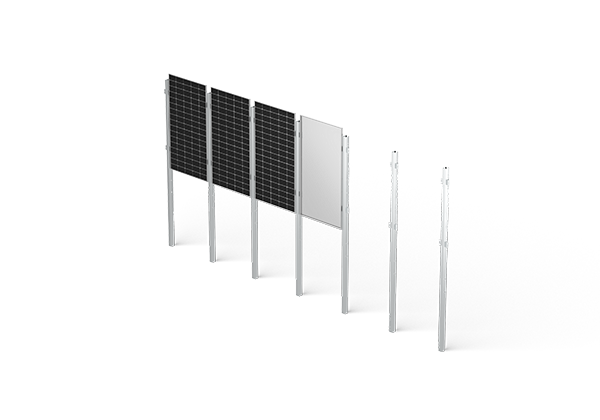
Foundation selection should follow a site-specific structural and geotechnical assessment rather than a one-size-fits-all rule.
Driven piles can be attractive because installation can be mechanized and repeated efficiently across many foundation points. DOE documents ground-mounted PV applications using driven steel piles, with design and depth determined through geotechnical investigation and pile load testing.
However, driven piles are not suitable everywhere. Very hard ground, rock, obstructions, or unfavorable soil conditions can make driving difficult. Pre-drilling or an alternative foundation may then be necessary.
The U.S. Department of Energy lists helical piles and earth screws among foundation types used for ground installations. For vertical PV, they can be considered when site investigation confirms adequate capacity and when construction requirements favor screw-based installation.
Engineering verification remains essential. Teams should evaluate pullout, lateral, and compression capacity, corrosion exposure, equipment, and groundwater conditions before finalizing the design.
Concrete offers design flexibility because it can distribute loads over a larger bearing area. This can help where deep installation is difficult. Antaisolar’s vertical mounting documentation identifies concrete block foundations as an option alongside ground screws.
The trade-off is construction complexity. Concrete foundations may require excavation, reinforcement, concrete delivery, curing time, and additional material handling. For remote projects, these requirements can affect schedule and installed cost.
Climate loads also matter. Wind, snow, flooding, and corrosion exposure can change foundation requirements. DOE guidance shows that ground-mounted PV designs can use different foundation types, while investigations determine appropriate construction details.
For flood-prone locations, erosion and scour deserve particular attention. Deep foundation elements can offer advantages where shallow foundations could be undermined. Drainage and finished-ground conditions should therefore be considered alongside the foundation itself.
A driven pile may cost more per foundation than a simple concrete solution but require less material handling and faster repetitive installation. Conversely, concrete may be more practical where pile installation is difficult or specialized equipment would be expensive.
Comparison should use total installed cost and lifecycle performance. Early geotechnical testing can reduce uncertainty and help engineering teams avoid costly changes after procurement or construction has started.
Our published MetaGround vertical system specification lists a 10° tilt angle, or a project-specific angle, wind loads up to 60 m/s, and a snow load of 1.6 kN/m². It supports framed and frameless modules, uses HDG, ZAM, and SUS304 materials, and follows Eurocode, NEN, and BS EN design standards. The documented service life is 25 years, with a 10-year warranty.
For business project teams, our approach is to match the mounting structure and foundation with actual conditions. Site surveys, geotechnical review, foundation analysis, structural calculations, and construction requirements should work together to create a dependable design.
For commercial and utility-scale buyers, the reliable approach is to evaluate geotechnical conditions, environmental loads, installation constraints, and lifecycle economics before selecting the foundation. Then, the foundation becomes a key part of long-term PV project reliability.
Why Foundation Selection Matters
Vertical mounting changes how loads are transferred through the racking structure. Wind can create significant lateral and uplift forces, while the dead load of modules and steelwork must also be supported safely. A suitable foundation must transfer these loads into the ground without excessive movement.Foundation selection should follow a site-specific structural and geotechnical assessment rather than a one-size-fits-all rule.
Driven Piles for Suitable Soils
Driven steel piles are widely used for ground-mounted PV because they provide structural support with relatively limited excavation. They are installed to a designed depth and rely on interaction between the pile and surrounding soil to resist axial and lateral loads.Driven piles can be attractive because installation can be mechanized and repeated efficiently across many foundation points. DOE documents ground-mounted PV applications using driven steel piles, with design and depth determined through geotechnical investigation and pile load testing.
However, driven piles are not suitable everywhere. Very hard ground, rock, obstructions, or unfavorable soil conditions can make driving difficult. Pre-drilling or an alternative foundation may then be necessary.
Ground Screws and Helical Piles
Ground screws, also called earth screws in some project documentation, can be useful where a project needs limited concrete and relatively low ground disturbance. Their helical geometry develops resistance through surrounding soil, making soil properties and installation conditions important considerations.The U.S. Department of Energy lists helical piles and earth screws among foundation types used for ground installations. For vertical PV, they can be considered when site investigation confirms adequate capacity and when construction requirements favor screw-based installation.
Engineering verification remains essential. Teams should evaluate pullout, lateral, and compression capacity, corrosion exposure, equipment, and groundwater conditions before finalizing the design.
Concrete Foundations for Difficult Ground
Concrete foundations can be an alternative when driven or screwed foundations cannot achieve the required capacity. Depending on the design, systems may use concrete blocks, pads, piers, or concrete combined with embedded steel supports.Concrete offers design flexibility because it can distribute loads over a larger bearing area. This can help where deep installation is difficult. Antaisolar’s vertical mounting documentation identifies concrete block foundations as an option alongside ground screws.
The trade-off is construction complexity. Concrete foundations may require excavation, reinforcement, concrete delivery, curing time, and additional material handling. For remote projects, these requirements can affect schedule and installed cost.
Match the Foundation to Site Conditions
The best foundation is the one that satisfies structural requirements while fitting the site's geotechnical and construction constraints. Soil investigation should establish soil layers, bearing characteristics, groundwater conditions, and the presence of rock or buried obstructions.Climate loads also matter. Wind, snow, flooding, and corrosion exposure can change foundation requirements. DOE guidance shows that ground-mounted PV designs can use different foundation types, while investigations determine appropriate construction details.
For flood-prone locations, erosion and scour deserve particular attention. Deep foundation elements can offer advantages where shallow foundations could be undermined. Drainage and finished-ground conditions should therefore be considered alongside the foundation itself.
Compare Total Installed Cost
The lowest unit price is not necessarily the lowest-cost option. Procurement teams should consider equipment mobilization, labor, excavation, concrete, transportation, installation rate, testing, site restoration, and potential delays.A driven pile may cost more per foundation than a simple concrete solution but require less material handling and faster repetitive installation. Conversely, concrete may be more practical where pile installation is difficult or specialized equipment would be expensive.
Comparison should use total installed cost and lifecycle performance. Early geotechnical testing can reduce uncertainty and help engineering teams avoid costly changes after procurement or construction has started.
How Antaisolar Delivers Vertical Ground Mount Solutions
We at Antaisolar believe foundation selection should be integrated into engineering rather than treated as an afterthought. Our Vertical Ground Mount Solutions support portrait and landscape module layouts and offer optional ground screw or concrete foundations, allowing projects to respond to different site conditions.Our published MetaGround vertical system specification lists a 10° tilt angle, or a project-specific angle, wind loads up to 60 m/s, and a snow load of 1.6 kN/m². It supports framed and frameless modules, uses HDG, ZAM, and SUS304 materials, and follows Eurocode, NEN, and BS EN design standards. The documented service life is 25 years, with a 10-year warranty.
For business project teams, our approach is to match the mounting structure and foundation with actual conditions. Site surveys, geotechnical review, foundation analysis, structural calculations, and construction requirements should work together to create a dependable design.
Building the Right Foundation for Long-Term PV Performance
There is no universally best foundation for every solar panel vertical mounting project. Driven piles can be effective on suitable soils, ground screws or helical piles can provide installation flexibility, and concrete foundations can address specific ground or structural challenges.For commercial and utility-scale buyers, the reliable approach is to evaluate geotechnical conditions, environmental loads, installation constraints, and lifecycle economics before selecting the foundation. Then, the foundation becomes a key part of long-term PV project reliability.
end