
Power Supply Architecture of Electronic Control Units Developed by Solar Tracker Manufacturers
September 04, 2026
Reliable power delivery is a fundamental requirement for electronic control units (ECUs) used in utility-scale solar trackers. These controllers must operate sensors, communication interfaces, motor-control electronics, and protection functions while remaining available during changing weather and grid conditions. For project developers and EPC teams, the power architecture therefore deserves the same engineering attention as the mechanical drive system. We design our solutions at Antaisolar around this principle, integrating power supply flexibility with intelligent tracking and dependable field operation.
For commercial and utility-scale projects, this makes power architecture more than an auxiliary design feature. Developers need predictable operation over a long asset life, while EPC teams need an architecture that can be commissioned, maintained, and diagnosed efficiently. A properly engineered power system should therefore address normal operation, temporary interruptions, voltage variation, and backup requirements.
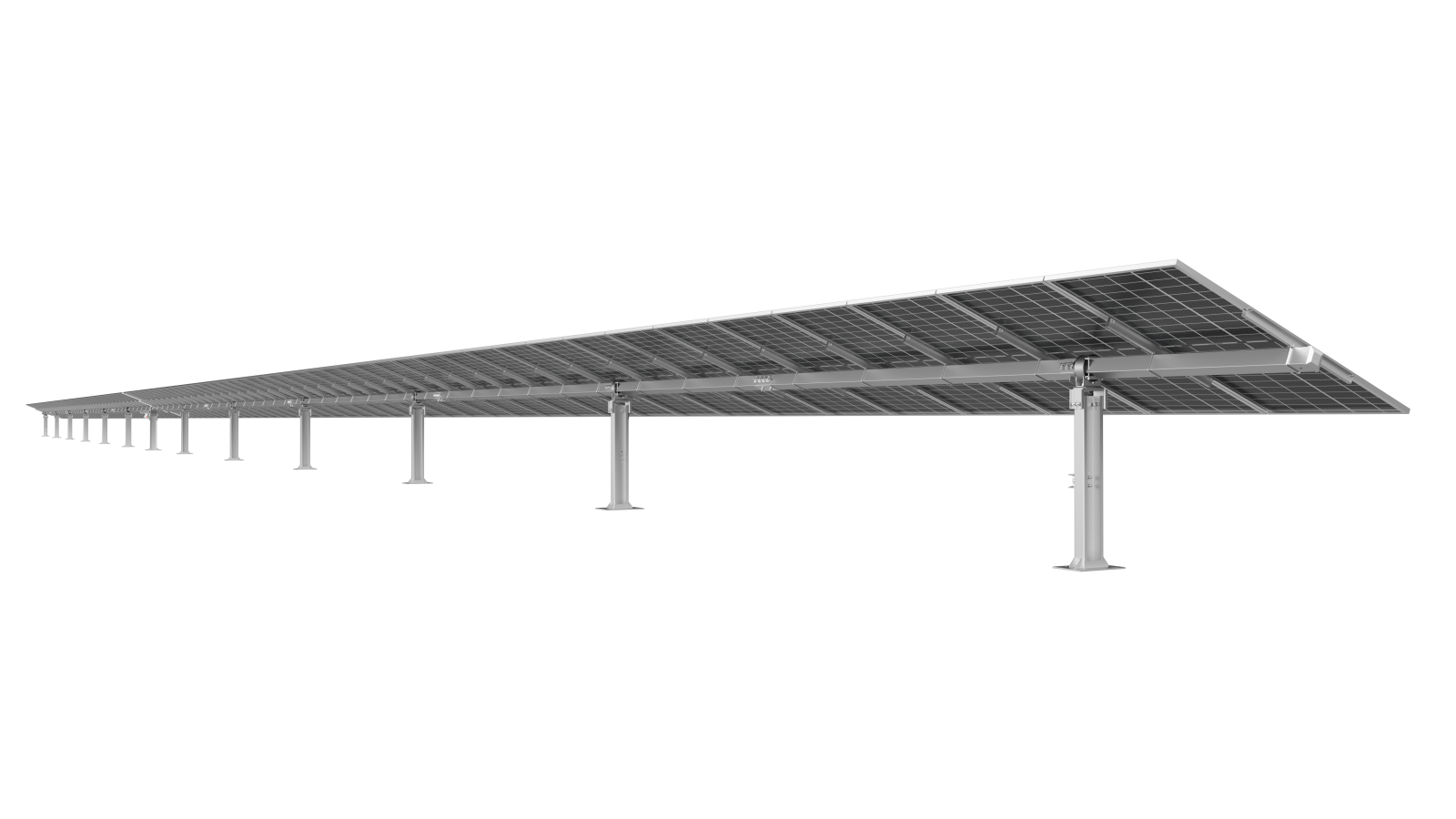
Our TAI-Simple provides a useful example. Its published specification lists 300–1500 VDC string-powered, 90–264 VAC-powered, and backup lithium battery power options. It also specifies a 24 V DC motor, allowing the control architecture to support the drive system while maintaining appropriate electrical interfaces.
This flexibility can be valuable for large solar plants. A backup battery can help maintain selected control and communication functions when the primary power source is temporarily unavailable, depending on the system configuration.
The controller should not simply be treated as a motor switch. It is part of a wider control network that must interpret commands, collect operating data, and communicate with higher-level systems. Antaisolar's SmartTrail architecture, for example, includes Tracker Control Units (TCUs), Network Control Units (NCUs), and sensors, supported by remote O&M, SCADA, and mobile-app interfaces.
This distributed architecture also supports scalability. Individual trackers can perform local control while network-level equipment coordinates communication and monitoring. Such separation helps project teams identify whether a problem originates in the power supply, local controller, communications network, or mechanical system.
From an engineering perspective, the power supply should therefore support the control functions required for protective movement and monitoring. Backup power becomes particularly relevant when normal electrical availability is interrupted during an adverse event. The architecture should also allow appropriate fault detection and recovery without compromising safe operating states.
Our TAI-Simple specification lists controller energy consumption at approximately 0.05 kWh/day, alongside a stated tracking accuracy of ±2°. The system can track through a rotation range of up to ±60°, with night-time stow and backtracking functions. These specifications illustrate why both control performance and auxiliary consumption should be evaluated when comparing tracker architectures.
For project buyers, the important question is not simply whether an ECU consumes little power. The more useful evaluation is whether its energy consumption, control reliability, and tracking performance are appropriately balanced over the project's operating life.
We consider this type of structured verification important when developing equipment for demanding utility-scale applications. Buyers can use standardized qualification information to compare tracker designs more consistently and evaluate whether stated specifications are supported by appropriate testing.
Its architecture supports one controller per tracker, multiple power-supply options, wireless or wired communications, night-time stow, and backtracking. SmartTrail further connects local tracking functions with network control and remote O&M capabilities, giving project teams greater visibility across the plant.
We believe this approach is well suited to utility-scale projects, where system flexibility and reliable tracking are important considerations. By combining flexible power architecture, SmartTrail intelligent control, and established tracker hardware, Antaisolar provides solar tracking systems designed for stable operation and practical project requirements.
Why Power Architecture Matters in a Solar Tracking System
A solar tracking system depends on continuous coordination between its mechanical and electronic components. The ECU receives operating information, processes tracking commands, communicates with other controllers, and ultimately enables the tracker to position modules correctly. If its power supply is unstable, tracking accuracy, communications, monitoring, and protective functions can all be affected.For commercial and utility-scale projects, this makes power architecture more than an auxiliary design feature. Developers need predictable operation over a long asset life, while EPC teams need an architecture that can be commissioned, maintained, and diagnosed efficiently. A properly engineered power system should therefore address normal operation, temporary interruptions, voltage variation, and backup requirements.
Multiple Power Sources Improve Tracker Availability
A practical ECU architecture can use more than one source of electrical power. The objective is to maintain control availability while avoiding unnecessary complexity. Depending on tracker design, power can come from the PV string, an AC auxiliary source, or an energy-storage backup.Our TAI-Simple provides a useful example. Its published specification lists 300–1500 VDC string-powered, 90–264 VAC-powered, and backup lithium battery power options. It also specifies a 24 V DC motor, allowing the control architecture to support the drive system while maintaining appropriate electrical interfaces.
This flexibility can be valuable for large solar plants. A backup battery can help maintain selected control and communication functions when the primary power source is temporarily unavailable, depending on the system configuration.
Separating Control, Drive, and Communication Functions
A robust architecture should clearly define how power moves from the available source to the ECU, motor driver, sensors, and communication equipment. Power conversion and protection must be matched to the electrical characteristics of each subsystem.The controller should not simply be treated as a motor switch. It is part of a wider control network that must interpret commands, collect operating data, and communicate with higher-level systems. Antaisolar's SmartTrail architecture, for example, includes Tracker Control Units (TCUs), Network Control Units (NCUs), and sensors, supported by remote O&M, SCADA, and mobile-app interfaces.
This distributed architecture also supports scalability. Individual trackers can perform local control while network-level equipment coordinates communication and monitoring. Such separation helps project teams identify whether a problem originates in the power supply, local controller, communications network, or mechanical system.
Designing for Faults, Weather, and Safe Stow
Power architecture must also support the safety logic of a tracker. Severe wind, snow, flooding, or hail can require the array to move into a protective position. SmartTrail incorporates wind, snow, flood, and hail stow functions, with sensors and intelligent control capabilities used to support protection strategies during severe conditions.From an engineering perspective, the power supply should therefore support the control functions required for protective movement and monitoring. Backup power becomes particularly relevant when normal electrical availability is interrupted during an adverse event. The architecture should also allow appropriate fault detection and recovery without compromising safe operating states.
Solar Tracking System Design Should Consider Energy Consumption
Tracker control electronics consume energy, so their own electrical demand should be considered during project-level energy-yield analysis. NREL's System Advisor Model, for example, includes tracking power consumption as a parameter in tracker performance modeling.Our TAI-Simple specification lists controller energy consumption at approximately 0.05 kWh/day, alongside a stated tracking accuracy of ±2°. The system can track through a rotation range of up to ±60°, with night-time stow and backtracking functions. These specifications illustrate why both control performance and auxiliary consumption should be evaluated when comparing tracker architectures.
For project buyers, the important question is not simply whether an ECU consumes little power. The more useful evaluation is whether its energy consumption, control reliability, and tracking performance are appropriately balanced over the project's operating life.
Qualification and Verification of Electronic Equipment
Power architecture should ultimately be supported by systematic qualification rather than relying only on component-level claims. IEC 62817 establishes design qualification procedures for solar trackers and includes testing for key components and complete tracker systems. The standard also addresses design qualification testing specific to tracker electronic equipment.We consider this type of structured verification important when developing equipment for demanding utility-scale applications. Buyers can use standardized qualification information to compare tracker designs more consistently and evaluate whether stated specifications are supported by appropriate testing.
Building a More Resilient Tracker Architecture with Antaisolar
At Antaisolar, we combine mechanical engineering with electronic control and intelligent software to develop a complete solar tracking system rather than treating the controller as an isolated component. Our TAI-Simple combines a single slew-drive design, dual-sided symmetrical damping, large-angle tracking, terrain adaptability, bifacial-module compatibility, and SmartTrail intelligent control.Its architecture supports one controller per tracker, multiple power-supply options, wireless or wired communications, night-time stow, and backtracking. SmartTrail further connects local tracking functions with network control and remote O&M capabilities, giving project teams greater visibility across the plant.
Power Architecture as a Long-Term Project Decision
A well-designed ECU power supply architecture contributes directly to tracker availability, protection, maintainability, and predictable energy production. For developers and EPC contractors, evaluating power sources, backup capability, controller consumption, communications, environmental protection, and qualification testing together provides a more complete picture of system quality.We believe this approach is well suited to utility-scale projects, where system flexibility and reliable tracking are important considerations. By combining flexible power architecture, SmartTrail intelligent control, and established tracker hardware, Antaisolar provides solar tracking systems designed for stable operation and practical project requirements.
end