
AT-Spark vs Traditional Solar Trackers: Key Differences in Structure, Intelligence, and Performance
June 08, 2026
Utility-scale solar projects are becoming larger, more complex, and more demanding in terms of energy output and operational reliability. As photovoltaic developers look for better returns, solar tracking technology has moved beyond simple mechanical movement toward solutions that combine stronger structures, smarter controls, and improved adaptability.
Traditional solar trackers have played an important role in increasing photovoltaic energy production by adjusting module angles according to the sun’s position. However, changing project conditions, including challenging terrain, extreme weather, and cost pressures, require more advanced engineering approaches.
When we develop a solar tracking solution, we focus on solving practical challenges throughout the entire project lifecycle. AT-Spark represents a new generation of tracker design that improves structural efficiency, installation convenience, and intelligent operation compared with conventional approaches.
Traditional solar trackers generally use a single-axis mechanism that rotates photovoltaic modules from east to west during the day. Their basic purpose is to increase solar exposure and improve energy capture compared with fixed-tilt systems.
Many conventional designs rely on standard torque tubes, drive systems, and bearing structures to achieve movement. While these systems have supported large-scale solar deployment, they may face limitations when applied to increasingly demanding project environments.
For example, longer tracker rows can create higher structural stress, while uneven terrain can complicate installation and alignment. In regions with strong winds, tracker structures must also balance movement flexibility with sufficient mechanical stability.
A traditional solar tracker can provide reliable operation when properly engineered, but modern solar projects require solutions that offer greater adaptability and optimized lifecycle performance.
One major difference between AT-Spark and traditional designs is the structural approach. AT-Spark uses a self-developed octagonal torque tube designed to improve structural efficiency while reducing unnecessary material usage.
The optimized torque tube design increases specific stiffness and specific strength, allowing the structure to handle demanding operating conditions more effectively. The design also supports longer tracker spans, helping reduce the number of foundation piles required in certain applications.
Another important improvement is the multi-slew drive configuration. Traditional systems may experience uneven torque distribution along longer rows, while a multi-point drive approach helps distribute mechanical forces more evenly.
This structural optimization provides benefits beyond strength. Reducing material requirements while maintaining performance can contribute to improved project economics and more efficient installation processes.
Solar project locations are becoming increasingly diverse. Developers are no longer limited to flat, simple sites, which means trackers must adapt to different terrain conditions.
Traditional solar trackers may require additional engineering adjustments when installed on uneven ground. Complex terrain can increase construction challenges and affect alignment accuracy if not carefully managed.
AT-Spark addresses this challenge through a patented dual-spherical bearing design. This approach allows omni-directional rotation and enables adaptation to north-south slopes up to 15%, improving flexibility for different site conditions.
Improved terrain adaptability allows developers to consider a wider range of project locations. This flexibility can support better land utilization and reduce limitations during site selection.
Installation efficiency has become an increasingly important factor in solar project development. Labor availability, construction schedules, and project costs all influence the value of a tracker design.
Traditional tracker systems may require more complex alignment and assembly procedures, particularly for critical mechanical components. These steps can increase installation time and create additional requirements for field adjustment.
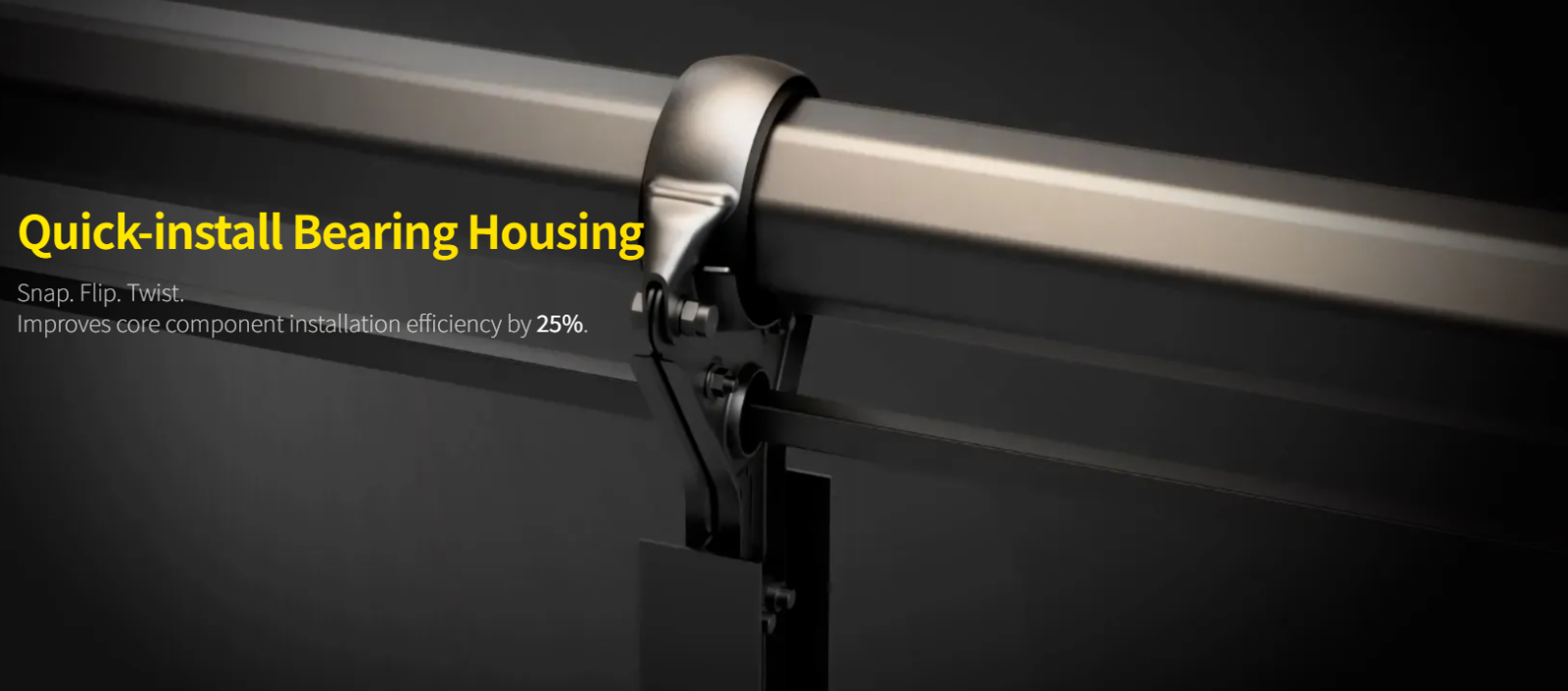
AT-Spark introduces a quick-install bearing housing design that simplifies installation through a snap-fit structure. This improvement helps reduce installation complexity while making maintenance activities more convenient.
A more efficient installation process does not only save time during construction. It can also improve consistency because standardized component assembly reduces potential installation errors.
Mechanical improvements are only part of the difference between AT-Spark and traditional solar trackers. Intelligent control systems have become essential for maximizing energy production and protecting equipment.
Many traditional trackers rely on basic positioning methods, while advanced solutions integrate algorithms that consider changing environmental conditions. Smart control can optimize tracking behavior, improve energy capture, and respond to extreme weather situations.
AT-Spark integrates SmartTrail™ intelligent control technology, which uses advanced algorithms and multiple protection modes to improve operational performance. The system also supports different operation and maintenance platforms for easier monitoring and management.
This combination of mechanical engineering and digital intelligence represents a shift from simple movement systems toward complete lifecycle management solutions.
The difference between traditional and next-generation trackers is ultimately reflected in long-term project value. A tracker must deliver stable performance throughout years of outdoor operation while minimizing maintenance requirements.
Structural strength, component durability, weather resistance, and intelligent monitoring all contribute to reliability. Modern projects require systems that not only follow the sun but also manage risks associated with changing environments.
By combining optimized mechanical structures with intelligent software, advanced trackers can provide stronger support for utility-scale photovoltaic development.
The evolution of solar trackers shows that higher energy yield is only one part of the equation. Lower operational risks, easier maintenance, and improved adaptability are equally important factors for successful solar investments.
The comparison between AT-Spark and traditional solar trackers highlights how innovation is reshaping photovoltaic infrastructure. Improvements in structural design, terrain adaptability, installation methods, and intelligent control create a more comprehensive approach to solar tracking.
Real project obstacles drive our R&D, just as the long-term viability of clean energy guides our vision. Through relentless technological advancement and engineering excellence, Antaisolar equips partners with solar solutions that deliver superior efficiency, lasting reliability, and the flexibility to evolve alongside the industry.
Traditional solar trackers have played an important role in increasing photovoltaic energy production by adjusting module angles according to the sun’s position. However, changing project conditions, including challenging terrain, extreme weather, and cost pressures, require more advanced engineering approaches.
When we develop a solar tracking solution, we focus on solving practical challenges throughout the entire project lifecycle. AT-Spark represents a new generation of tracker design that improves structural efficiency, installation convenience, and intelligent operation compared with conventional approaches.
Traditional Solar Trackers and Their Common Design Characteristics
Traditional solar trackers generally use a single-axis mechanism that rotates photovoltaic modules from east to west during the day. Their basic purpose is to increase solar exposure and improve energy capture compared with fixed-tilt systems.
Many conventional designs rely on standard torque tubes, drive systems, and bearing structures to achieve movement. While these systems have supported large-scale solar deployment, they may face limitations when applied to increasingly demanding project environments.
For example, longer tracker rows can create higher structural stress, while uneven terrain can complicate installation and alignment. In regions with strong winds, tracker structures must also balance movement flexibility with sufficient mechanical stability.
A traditional solar tracker can provide reliable operation when properly engineered, but modern solar projects require solutions that offer greater adaptability and optimized lifecycle performance.
AT-Spark Structural Innovations Improve Tracker Efficiency
One major difference between AT-Spark and traditional designs is the structural approach. AT-Spark uses a self-developed octagonal torque tube designed to improve structural efficiency while reducing unnecessary material usage.
The optimized torque tube design increases specific stiffness and specific strength, allowing the structure to handle demanding operating conditions more effectively. The design also supports longer tracker spans, helping reduce the number of foundation piles required in certain applications.
Another important improvement is the multi-slew drive configuration. Traditional systems may experience uneven torque distribution along longer rows, while a multi-point drive approach helps distribute mechanical forces more evenly.
This structural optimization provides benefits beyond strength. Reducing material requirements while maintaining performance can contribute to improved project economics and more efficient installation processes.
AT-Spark Provides Better Terrain Adaptability
Solar project locations are becoming increasingly diverse. Developers are no longer limited to flat, simple sites, which means trackers must adapt to different terrain conditions.
Traditional solar trackers may require additional engineering adjustments when installed on uneven ground. Complex terrain can increase construction challenges and affect alignment accuracy if not carefully managed.
AT-Spark addresses this challenge through a patented dual-spherical bearing design. This approach allows omni-directional rotation and enables adaptation to north-south slopes up to 15%, improving flexibility for different site conditions.
Improved terrain adaptability allows developers to consider a wider range of project locations. This flexibility can support better land utilization and reduce limitations during site selection.
Installation and Maintenance Differences Between Systems
Installation efficiency has become an increasingly important factor in solar project development. Labor availability, construction schedules, and project costs all influence the value of a tracker design.
Traditional tracker systems may require more complex alignment and assembly procedures, particularly for critical mechanical components. These steps can increase installation time and create additional requirements for field adjustment.
AT-Spark introduces a quick-install bearing housing design that simplifies installation through a snap-fit structure. This improvement helps reduce installation complexity while making maintenance activities more convenient.
A more efficient installation process does not only save time during construction. It can also improve consistency because standardized component assembly reduces potential installation errors.
Smart Control Technology Creates a New Tracking Experience
Mechanical improvements are only part of the difference between AT-Spark and traditional solar trackers. Intelligent control systems have become essential for maximizing energy production and protecting equipment.
Many traditional trackers rely on basic positioning methods, while advanced solutions integrate algorithms that consider changing environmental conditions. Smart control can optimize tracking behavior, improve energy capture, and respond to extreme weather situations.
AT-Spark integrates SmartTrail™ intelligent control technology, which uses advanced algorithms and multiple protection modes to improve operational performance. The system also supports different operation and maintenance platforms for easier monitoring and management.
This combination of mechanical engineering and digital intelligence represents a shift from simple movement systems toward complete lifecycle management solutions.
Reliability Considerations for Future Solar Projects
The difference between traditional and next-generation trackers is ultimately reflected in long-term project value. A tracker must deliver stable performance throughout years of outdoor operation while minimizing maintenance requirements.
Structural strength, component durability, weather resistance, and intelligent monitoring all contribute to reliability. Modern projects require systems that not only follow the sun but also manage risks associated with changing environments.
By combining optimized mechanical structures with intelligent software, advanced trackers can provide stronger support for utility-scale photovoltaic development.
The evolution of solar trackers shows that higher energy yield is only one part of the equation. Lower operational risks, easier maintenance, and improved adaptability are equally important factors for successful solar investments.
Moving Toward Smarter Solar Tracking Solutions
The comparison between AT-Spark and traditional solar trackers highlights how innovation is reshaping photovoltaic infrastructure. Improvements in structural design, terrain adaptability, installation methods, and intelligent control create a more comprehensive approach to solar tracking.
Real project obstacles drive our R&D, just as the long-term viability of clean energy guides our vision. Through relentless technological advancement and engineering excellence, Antaisolar equips partners with solar solutions that deliver superior efficiency, lasting reliability, and the flexibility to evolve alongside the industry.
end