
How Bifacial Solar Panels in Vertical Mount Systems Improve Energy Generation Profiles
August 21, 2026
The evolution of photovoltaic technology is driving project developers to explore solutions that can deliver higher energy output while making better use of available land resources. Traditional solar installations often rely on fixed orientations, but changing project conditions require more adaptable approaches. Combining bifacial solar panels vertical mount structures creates new opportunities to improve energy generation profiles, especially for land-constrained applications where efficiency and space utilization are critical.
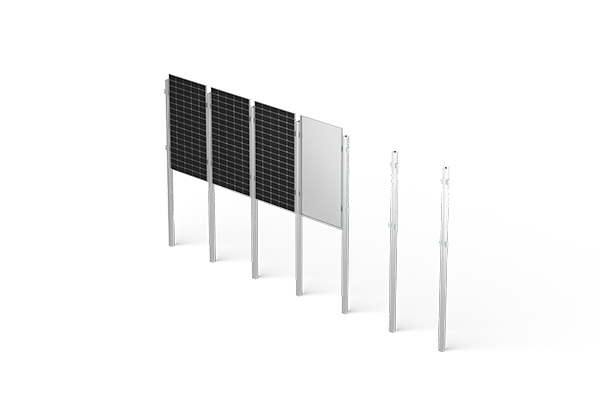
Bifacial solar panels are designed to capture sunlight from both the front and rear sides of the module. Unlike conventional monofacial panels that mainly generate electricity from direct sunlight exposure on one surface, bifacial technology can utilize reflected and diffused light from surrounding environments.
When bifacial solar panels vertical mount solutions are applied, the panels are positioned vertically to capture sunlight from different directions throughout the day. Depending on system orientation and site conditions, vertical bifacial configurations can produce a different daily generation profile from conventional fixed-tilt arrangements.
For commercial and utility-scale projects, this balanced output can provide valuable advantages. Instead of concentrating power generation around midday, vertical bifacial systems can produce electricity across a wider time range, supporting more stable energy production and potentially improving integration with energy consumption patterns.
Land availability has become an important consideration for solar developers worldwide. Many suitable locations, such as agricultural areas, transportation corridors, and industrial sites, have limited space or require designs that minimize land impact.
Vertical mounting systems provide an effective solution by reducing land occupation while maintaining photovoltaic performance. Their narrow footprint allows developers to utilize areas that may not be suitable for traditional solar layouts.
For example, vertical systems can be installed in areas such as agricultural land where maintaining open space is important. The design enables continued land usage while supporting renewable energy generation, making it a practical option for projects that require both energy production and efficient land management.
One of the key benefits of bifacial solar panels vertical mount configurations is their ability to improve daily generation distribution. Traditional fixed-tilt systems typically achieve peak production when the sun reaches optimal angles during midday. However, energy demand does not always follow this pattern.
Vertical bifacial installations can receive solar irradiance from different directions during the day, with the resulting generation profile depending on orientation and site conditions. By generating electricity at different times of the day, these systems help create a smoother production curve.
This characteristic is particularly valuable for projects connected to modern energy networks. A different generation profile may be relevant when evaluating grid integration, energy consumption patterns, and the potential role of storage.
The flexibility of vertical solar solutions makes them suitable for a wide range of environments. Unlike traditional solar structures that require large open spaces and specific orientations, vertical systems can adapt to various application scenarios.
Developers can apply vertical mounting solutions in locations including pastures, fencing areas, highways, and other land-constrained sites. This adaptability allows solar projects to expand into new application fields while maintaining reliable structural performance.
For engineering teams and project owners, system flexibility also simplifies project planning. Supporting different installation methods and module arrangements provides greater freedom when designing projects according to local conditions and energy objectives.
Although energy performance is important, structural reliability remains a key factor in solar project success. Mounting systems must withstand environmental challenges such as wind pressure, snow loads, and long-term outdoor exposure.
Advanced vertical mounting solutions are engineered with load-specific structural cross-sections to adapt to different environmental conditions. Compliance with recognized standards helps ensure that systems maintain stable performance throughout their service life.
For businesses developing large-scale photovoltaic projects, selecting reliable mounting structures reduces operational risks and supports long-term investment returns. A well-designed system should combine energy advantages with durability and dependable engineering performance.
We at Antaisolar focus on advancing renewable energy development through technological innovation and comprehensive PV mounting system solutions. We provide global customers with fixed mounting systems, tracking systems, and BIPV solutions designed to meet diverse project requirements across different markets.
Our vertical solar mounting systems are developed as an increasingly valuable solution for modern photovoltaic projects, especially in locations where land resources are limited. These systems maximize land utilization while maintaining excellent energy performance through optimized structural design.
Our Vertical Ground Mount Solutions support both portrait and landscape module layouts, offering flexible installation options with ground screw or concrete foundations. This adaptability makes them suitable for applications such as pastures, fencing, highways, and other land-constrained environments.
The system is also engineered with load-specific structural cross-sections to address different snow load conditions. Designed in compliance with Eurocode, NEN, and BS EN standards, our vertical solar mounting systems provide reliable long-term performance for demanding PV applications.
By combining efficient land use, structural reliability, and compatibility with bifacial solar panels vertical mount applications, we continue helping global partners develop smarter and more sustainable solar energy projects.
Understanding the Energy Advantages of Bifacial Solar Panels Vertical Mount
Bifacial solar panels are designed to capture sunlight from both the front and rear sides of the module. Unlike conventional monofacial panels that mainly generate electricity from direct sunlight exposure on one surface, bifacial technology can utilize reflected and diffused light from surrounding environments.
When bifacial solar panels vertical mount solutions are applied, the panels are positioned vertically to capture sunlight from different directions throughout the day. Depending on system orientation and site conditions, vertical bifacial configurations can produce a different daily generation profile from conventional fixed-tilt arrangements.
For commercial and utility-scale projects, this balanced output can provide valuable advantages. Instead of concentrating power generation around midday, vertical bifacial systems can produce electricity across a wider time range, supporting more stable energy production and potentially improving integration with energy consumption patterns.
Improving Land Utilization for Modern PV Projects
Land availability has become an important consideration for solar developers worldwide. Many suitable locations, such as agricultural areas, transportation corridors, and industrial sites, have limited space or require designs that minimize land impact.
Vertical mounting systems provide an effective solution by reducing land occupation while maintaining photovoltaic performance. Their narrow footprint allows developers to utilize areas that may not be suitable for traditional solar layouts.
For example, vertical systems can be installed in areas such as agricultural land where maintaining open space is important. The design enables continued land usage while supporting renewable energy generation, making it a practical option for projects that require both energy production and efficient land management.
Creating More Stable Daily Energy Generation Profiles
One of the key benefits of bifacial solar panels vertical mount configurations is their ability to improve daily generation distribution. Traditional fixed-tilt systems typically achieve peak production when the sun reaches optimal angles during midday. However, energy demand does not always follow this pattern.
Vertical bifacial installations can receive solar irradiance from different directions during the day, with the resulting generation profile depending on orientation and site conditions. By generating electricity at different times of the day, these systems help create a smoother production curve.
This characteristic is particularly valuable for projects connected to modern energy networks. A different generation profile may be relevant when evaluating grid integration, energy consumption patterns, and the potential role of storage.
Adapting Vertical Mount Systems to Diverse Applications
The flexibility of vertical solar solutions makes them suitable for a wide range of environments. Unlike traditional solar structures that require large open spaces and specific orientations, vertical systems can adapt to various application scenarios.
Developers can apply vertical mounting solutions in locations including pastures, fencing areas, highways, and other land-constrained sites. This adaptability allows solar projects to expand into new application fields while maintaining reliable structural performance.
For engineering teams and project owners, system flexibility also simplifies project planning. Supporting different installation methods and module arrangements provides greater freedom when designing projects according to local conditions and energy objectives.
Ensuring Structural Reliability in Different Environments
Although energy performance is important, structural reliability remains a key factor in solar project success. Mounting systems must withstand environmental challenges such as wind pressure, snow loads, and long-term outdoor exposure.
Advanced vertical mounting solutions are engineered with load-specific structural cross-sections to adapt to different environmental conditions. Compliance with recognized standards helps ensure that systems maintain stable performance throughout their service life.
For businesses developing large-scale photovoltaic projects, selecting reliable mounting structures reduces operational risks and supports long-term investment returns. A well-designed system should combine energy advantages with durability and dependable engineering performance.
Enhancing Solar Project Value with Antaisolar's Vertical Mounting Systems
We at Antaisolar focus on advancing renewable energy development through technological innovation and comprehensive PV mounting system solutions. We provide global customers with fixed mounting systems, tracking systems, and BIPV solutions designed to meet diverse project requirements across different markets.
Our vertical solar mounting systems are developed as an increasingly valuable solution for modern photovoltaic projects, especially in locations where land resources are limited. These systems maximize land utilization while maintaining excellent energy performance through optimized structural design.
Our Vertical Ground Mount Solutions support both portrait and landscape module layouts, offering flexible installation options with ground screw or concrete foundations. This adaptability makes them suitable for applications such as pastures, fencing, highways, and other land-constrained environments.
The system is also engineered with load-specific structural cross-sections to address different snow load conditions. Designed in compliance with Eurocode, NEN, and BS EN standards, our vertical solar mounting systems provide reliable long-term performance for demanding PV applications.
By combining efficient land use, structural reliability, and compatibility with bifacial solar panels vertical mount applications, we continue helping global partners develop smarter and more sustainable solar energy projects.
end