
LCOE Sensitivity Analysis: Fixed Tilt vs. Tracker vs. Vertical Solar Mount in E-W Orientation
August 19, 2026
Levelized cost of electricity (LCOE) remains one of the most important metrics for evaluating photovoltaic project economics. As developers, EPC contractors, and investors compare different PV mounting approaches, the relationship between energy yield, land utilization, construction cost, and long-term operation becomes increasingly important. Fixed tilt systems, solar trackers, and vertical solar mount solutions each provide different advantages depending on project conditions, especially when considering east-west (E-W) orientation and land availability.
LCOE represents the lifecycle cost of electricity generation on a per-unit-of-energy basis, typically expressed as cost per MWh. It considers multiple factors, including initial investment, operation and maintenance expenses, system efficiency, energy production, and project lifespan. Because each mounting technology affects these factors differently, selecting an appropriate structure can influence project economics and financial performance.
Fixed tilt systems are widely used because of their simple design and relatively predictable installation process. They provide stable performance with fewer mechanical components, which can help reduce maintenance requirements. However, fixed tilt structures may have limitations when projects require higher energy output or better land utilization.
Tracking systems improve energy generation by adjusting module angles throughout the day. This dynamic operation allows panels to capture more sunlight, potentially increasing electricity production. However, trackers generally involve higher structural complexity and require careful evaluation of additional costs related to installation, maintenance, and land conditions.
East-west orientation has become an important consideration for many solar projects because it can influence energy distribution throughout the day. Unlike traditional south-facing arrangements, E-W configurations can shift generation toward morning and afternoon periods compared with some conventional orientations.
Fixed tilt systems with E-W orientation can provide advantages in specific applications, especially where simplicity and lower upfront costs are priorities. Their straightforward structure makes them suitable for projects where predictable operation and reduced maintenance are key objectives.
Solar trackers, on the other hand, focus on maximizing solar capture through continuous adjustment. In suitable environments, tracking systems can improve energy yield and enhance project economics. However, their performance advantage depends on factors such as climate conditions, land characteristics, and electricity pricing structures.
For developers conducting LCOE sensitivity analysis, the preferred option is not always the system with the highest energy output. The optimal solution must balance generation gains with investment requirements and long-term operational considerations.
Land availability has become a significant challenge for solar development. Many regions face competition for land resources, creating demand for mounting solutions that can support photovoltaic deployment in unconventional locations.
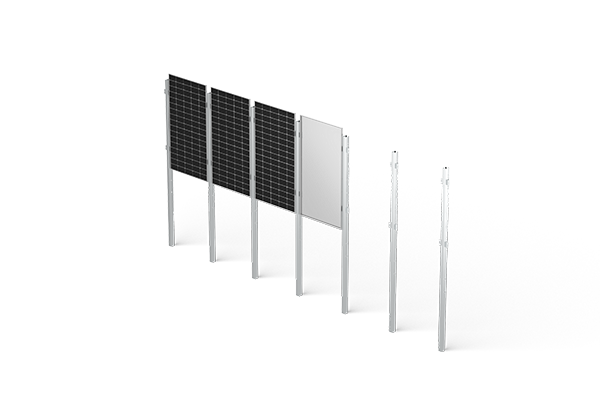
A vertical solar mount installs modules in a vertical configuration and can be considered for projects where land use and site layout are important design factors. This configuration can improve land-use efficiency and create new possibilities for solar projects in areas where traditional layouts may not be practical.
Vertical systems can be particularly suitable for applications such as agricultural land, highways, fencing areas, and other land-constrained environments. By reducing space requirements and maintaining energy production throughout the day, vertical solar mounting solutions offer developers additional flexibility when planning projects.
The LCOE performance of vertical mounting depends on project-specific conditions. While traditional systems may achieve higher peak generation under certain circumstances, vertical systems can provide strong economic value by improving land utilization, simplifying integration with existing infrastructure, and creating additional revenue opportunities.
When comparing fixed tilt, trackers, and vertical mounting systems, project teams should analyze several critical factors. Energy yield is an important measurement, but it should be considered alongside construction costs, land requirements, maintenance strategies, and environmental conditions.
Land value can significantly influence the final LCOE calculation. In areas where available land is limited or expensive, a solution that uses space more efficiently may provide stronger economic advantages despite different energy generation characteristics.
Climate conditions also affect system selection. Snow loads, wind conditions, terrain characteristics, and environmental regulations can influence structural requirements and operating performance. A mounting solution designed for local conditions can reduce risks and support long-term reliability.
Additionally, compliance with engineering standards is essential for ensuring project durability. Structures that meet recognized design requirements can provide greater confidence for investors and operators managing long-term solar assets.
The future of PV development will require more flexible approaches to system design. Rather than relying on a single mounting technology, developers increasingly need solutions that match specific project environments and economic goals.
LCOE sensitivity analysis provides a valuable framework for comparing different options. By evaluating energy production, investment costs, land utilization, and operational requirements together, project stakeholders can make better-informed decisions.
As solar markets continue expanding, technologies that improve adaptability will become increasingly important. Mounting solutions that support different terrains, applications, and land conditions can help accelerate renewable energy deployment while improving project profitability.
We are Antaisolar, dedicated to advancing new energy development through technological innovation and providing comprehensive PV mounting system solutions. Our solutions cover fixed mounting systems, tracking systems, and BIPV solutions, supporting global customers with complete services from design and engineering to installation guidance and lifecycle support.
Our vertical solar mounting systems are designed for modern PV projects requiring efficient land utilization and reliable energy performance. As part of our Vertical Ground Mount Solutions, these systems support both portrait and landscape module layouts, with optional ground screw or concrete foundations to meet different project requirements. They are suitable for applications including pastures, fencing, highways, and other land-constrained environments.
Our vertical solar mounting systems are engineered with load-specific structural cross-sections to adapt to different snow load conditions. Designed in compliance with Eurocode, NEN, and BS EN standards, they provide reliable long-term performance across diverse environments. By combining flexible installation options with efficient land use, Antaisolar helps customers develop practical solar solutions for evolving energy needs.
Understanding LCOE Sensitivity in PV System Selection
LCOE represents the lifecycle cost of electricity generation on a per-unit-of-energy basis, typically expressed as cost per MWh. It considers multiple factors, including initial investment, operation and maintenance expenses, system efficiency, energy production, and project lifespan. Because each mounting technology affects these factors differently, selecting an appropriate structure can influence project economics and financial performance.
Fixed tilt systems are widely used because of their simple design and relatively predictable installation process. They provide stable performance with fewer mechanical components, which can help reduce maintenance requirements. However, fixed tilt structures may have limitations when projects require higher energy output or better land utilization.
Tracking systems improve energy generation by adjusting module angles throughout the day. This dynamic operation allows panels to capture more sunlight, potentially increasing electricity production. However, trackers generally involve higher structural complexity and require careful evaluation of additional costs related to installation, maintenance, and land conditions.
Comparing Fixed Tilt and Tracking Systems in E-W Orientation
East-west orientation has become an important consideration for many solar projects because it can influence energy distribution throughout the day. Unlike traditional south-facing arrangements, E-W configurations can shift generation toward morning and afternoon periods compared with some conventional orientations.
Fixed tilt systems with E-W orientation can provide advantages in specific applications, especially where simplicity and lower upfront costs are priorities. Their straightforward structure makes them suitable for projects where predictable operation and reduced maintenance are key objectives.
Solar trackers, on the other hand, focus on maximizing solar capture through continuous adjustment. In suitable environments, tracking systems can improve energy yield and enhance project economics. However, their performance advantage depends on factors such as climate conditions, land characteristics, and electricity pricing structures.
For developers conducting LCOE sensitivity analysis, the preferred option is not always the system with the highest energy output. The optimal solution must balance generation gains with investment requirements and long-term operational considerations.
The Growing Value of Vertical Solar Mount Solutions
Land availability has become a significant challenge for solar development. Many regions face competition for land resources, creating demand for mounting solutions that can support photovoltaic deployment in unconventional locations.
A vertical solar mount installs modules in a vertical configuration and can be considered for projects where land use and site layout are important design factors. This configuration can improve land-use efficiency and create new possibilities for solar projects in areas where traditional layouts may not be practical.
Vertical systems can be particularly suitable for applications such as agricultural land, highways, fencing areas, and other land-constrained environments. By reducing space requirements and maintaining energy production throughout the day, vertical solar mounting solutions offer developers additional flexibility when planning projects.
The LCOE performance of vertical mounting depends on project-specific conditions. While traditional systems may achieve higher peak generation under certain circumstances, vertical systems can provide strong economic value by improving land utilization, simplifying integration with existing infrastructure, and creating additional revenue opportunities.
Key Factors Affecting LCOE Performance Across Mounting Options
When comparing fixed tilt, trackers, and vertical mounting systems, project teams should analyze several critical factors. Energy yield is an important measurement, but it should be considered alongside construction costs, land requirements, maintenance strategies, and environmental conditions.
Land value can significantly influence the final LCOE calculation. In areas where available land is limited or expensive, a solution that uses space more efficiently may provide stronger economic advantages despite different energy generation characteristics.
Climate conditions also affect system selection. Snow loads, wind conditions, terrain characteristics, and environmental regulations can influence structural requirements and operating performance. A mounting solution designed for local conditions can reduce risks and support long-term reliability.
Additionally, compliance with engineering standards is essential for ensuring project durability. Structures that meet recognized design requirements can provide greater confidence for investors and operators managing long-term solar assets.
Selecting the Right Mounting Strategy for Future Solar Projects
The future of PV development will require more flexible approaches to system design. Rather than relying on a single mounting technology, developers increasingly need solutions that match specific project environments and economic goals.
LCOE sensitivity analysis provides a valuable framework for comparing different options. By evaluating energy production, investment costs, land utilization, and operational requirements together, project stakeholders can make better-informed decisions.
As solar markets continue expanding, technologies that improve adaptability will become increasingly important. Mounting solutions that support different terrains, applications, and land conditions can help accelerate renewable energy deployment while improving project profitability.
How Antaisolar's Vertical Solar Mounting Systems Support Land-Constrained Projects
We are Antaisolar, dedicated to advancing new energy development through technological innovation and providing comprehensive PV mounting system solutions. Our solutions cover fixed mounting systems, tracking systems, and BIPV solutions, supporting global customers with complete services from design and engineering to installation guidance and lifecycle support.
Our vertical solar mounting systems are designed for modern PV projects requiring efficient land utilization and reliable energy performance. As part of our Vertical Ground Mount Solutions, these systems support both portrait and landscape module layouts, with optional ground screw or concrete foundations to meet different project requirements. They are suitable for applications including pastures, fencing, highways, and other land-constrained environments.
Our vertical solar mounting systems are engineered with load-specific structural cross-sections to adapt to different snow load conditions. Designed in compliance with Eurocode, NEN, and BS EN standards, they provide reliable long-term performance across diverse environments. By combining flexible installation options with efficient land use, Antaisolar helps customers develop practical solar solutions for evolving energy needs.
end