
Understanding Solar Array Tracker Technology and the Row Drive Design Behind TAI-Simple
June 10, 2026
Utility-scale photovoltaic projects are under increasing pressure to produce more electricity from available land while keeping construction and maintenance costs under control. A fixed mounting structure can provide a reliable solution, but it cannot adjust to changing solar positions during the day.
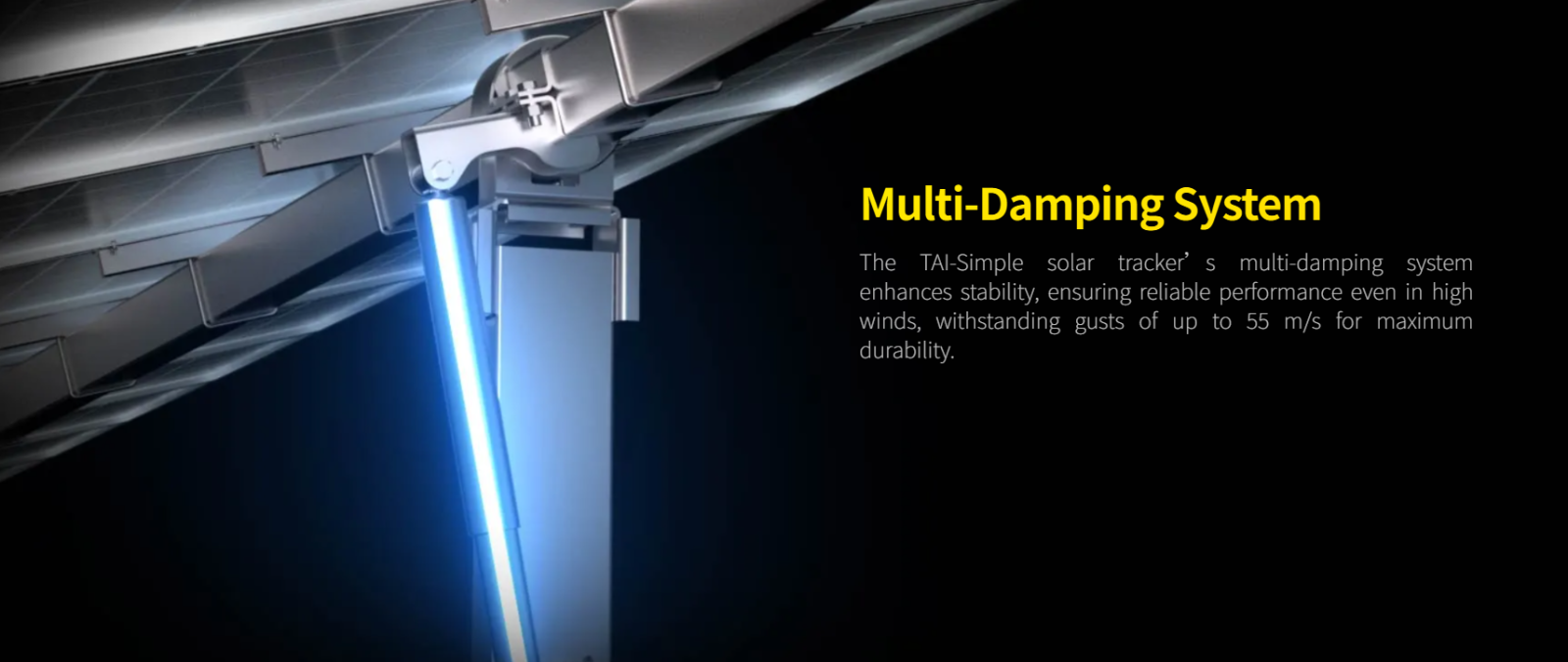
A solar array tracker addresses this limitation by allowing PV modules to rotate and maintain a more favorable orientation toward the sun. Instead of keeping panels at one fixed angle, the system continuously adjusts module positions to improve sunlight exposure and increase energy generation.
The performance of a tracking system depends not only on movement accuracy but also on the reliability of its mechanical design. The drive system, structural layout, control strategy, and ability to adapt to different project conditions all influence long-term results.
Solar trackers are mainly used in utility-scale installations where additional energy yield can create meaningful financial benefits. Large solar farms often occupy hundreds of acres, meaning even a small improvement in annual generation can significantly affect project returns.
A tracking structure works by rotating PV modules along a defined axis. Most modern utility applications use single-axis tracking because it provides a practical balance between energy gain and system complexity.
The value of tracking technology comes from improving the amount of direct sunlight received by modules throughout the day. Morning and afternoon production can be increased because the panels are no longer limited by a fixed installation angle.
However, higher energy output is only one part of the evaluation process. Developers must also consider mechanical reliability, installation time, operating environment, and maintenance requirements before selecting a tracking solution.
A solar array tracker depends on a coordinated combination of mechanical and electrical components. The structural system supports the modules, while the drive mechanism provides controlled rotation across multiple rows.
In a typical single-axis tracker, motors or drive units generate rotational force that moves the module rows along the tracking axis. Sensors, controllers, and software work together to determine the optimal position based on the sun’s location and project operating strategy.
The row drive design is especially important because it directly affects system reliability. If the drive structure is overly complicated, the number of potential failure points may increase. A simplified design can reduce mechanical stress and make operation easier to manage over the project lifetime.
TAI-Simple uses a streamlined drive approach to control tracker rows with fewer mechanical connections. This design philosophy focuses on improving movement efficiency while reducing unnecessary complexity in large-scale solar installations.
One of the biggest challenges for solar trackers is maintaining stable operation under changing environmental conditions. PV projects are exposed to wind, temperature variations, dust, and long-term outdoor operation.
The drive system must provide sufficient torque to move large module surfaces while maintaining accurate positioning. At the same time, the structure needs to resist external forces when the tracker is stationary or operating in challenging weather conditions.
TAI-Simple is designed around a simplified drive structure that helps reduce transmission losses and mechanical complexity. Fewer moving connections can make inspection and maintenance procedures more straightforward for operators.
The system approach also supports improved installation efficiency. Large solar projects often face tight construction schedules, and reducing assembly complexity can help EPC teams complete tracker installation more effectively.
A common mistake in solar tracker selection is focusing only on theoretical energy gains. Actual project performance depends heavily on site conditions.
Terrain is one important factor. Solar farms are not always built on perfectly flat land, and excessive grading can increase development costs. Tracker systems with flexible structural designs can help reduce preparation work and expand installation possibilities.
Wind conditions must also be carefully evaluated. Since trackers contain large moving surfaces, aerodynamic performance and structural stability are essential. A reliable design should balance movement capability with resistance against wind loads.
Module size is another consideration. As PV manufacturers continue introducing larger and heavier modules, tracker structures must evolve to provide adequate support without reducing operational reliability.
The long-term success of a solar project depends on more than initial installation costs. Maintenance requirements, component durability, and operational consistency directly affect the total return on investment.
A well-designed tracking system should make routine inspections easier and minimize unexpected downtime. Drive components should be durable enough for continuous outdoor operation while allowing efficient servicing when required.
Control intelligence also plays an increasing role. Modern systems can optimize tracking positions, manage backtracking strategies, and improve energy production under different weather and shading conditions.
For project owners, these improvements create a more predictable operating environment. The objective is not simply to install moving structures but to build a dependable energy generation platform that performs throughout the project lifecycle.
Choosing a tracking system requires a complete assessment of project requirements. Developers should evaluate land conditions, climate characteristics, module specifications, construction plans, and long-term maintenance strategies.
A suitable solution should match the physical conditions of the site while providing reliable energy improvement. The lowest initial equipment cost may not always deliver the best value if it results in higher maintenance needs or operational challenges.
Working with experienced engineering teams can help identify the right balance between performance, reliability, and investment. Proper system selection at the beginning of a project can prevent costly adjustments during construction or operation.
Solar tracking technology has become an important solution for improving the efficiency of large photovoltaic installations. The performance of a tracker depends heavily on how effectively its drive system, structure, and control functions work together.
Through improved dependability, installation efficiency, and long-term operation, our expertise demonstrates that reduced mechanical designs can offer real benefits. At Antaisolar, we think that solutions like TAI-Simple show how solar projects may benefit from well-planned engineering to achieve better performance and operational stability.
A solar array tracker addresses this limitation by allowing PV modules to rotate and maintain a more favorable orientation toward the sun. Instead of keeping panels at one fixed angle, the system continuously adjusts module positions to improve sunlight exposure and increase energy generation.
The performance of a tracking system depends not only on movement accuracy but also on the reliability of its mechanical design. The drive system, structural layout, control strategy, and ability to adapt to different project conditions all influence long-term results.
The Role of Tracking Systems in Large-Scale PV Projects
Solar trackers are mainly used in utility-scale installations where additional energy yield can create meaningful financial benefits. Large solar farms often occupy hundreds of acres, meaning even a small improvement in annual generation can significantly affect project returns.
A tracking structure works by rotating PV modules along a defined axis. Most modern utility applications use single-axis tracking because it provides a practical balance between energy gain and system complexity.
The value of tracking technology comes from improving the amount of direct sunlight received by modules throughout the day. Morning and afternoon production can be increased because the panels are no longer limited by a fixed installation angle.
However, higher energy output is only one part of the evaluation process. Developers must also consider mechanical reliability, installation time, operating environment, and maintenance requirements before selecting a tracking solution.
How Solar Array Tracker Row Movement Works
A solar array tracker depends on a coordinated combination of mechanical and electrical components. The structural system supports the modules, while the drive mechanism provides controlled rotation across multiple rows.
In a typical single-axis tracker, motors or drive units generate rotational force that moves the module rows along the tracking axis. Sensors, controllers, and software work together to determine the optimal position based on the sun’s location and project operating strategy.
The row drive design is especially important because it directly affects system reliability. If the drive structure is overly complicated, the number of potential failure points may increase. A simplified design can reduce mechanical stress and make operation easier to manage over the project lifetime.
TAI-Simple uses a streamlined drive approach to control tracker rows with fewer mechanical connections. This design philosophy focuses on improving movement efficiency while reducing unnecessary complexity in large-scale solar installations.
Engineering Advantages of TAI-Simple Drive Rows
One of the biggest challenges for solar trackers is maintaining stable operation under changing environmental conditions. PV projects are exposed to wind, temperature variations, dust, and long-term outdoor operation.
The drive system must provide sufficient torque to move large module surfaces while maintaining accurate positioning. At the same time, the structure needs to resist external forces when the tracker is stationary or operating in challenging weather conditions.
TAI-Simple is designed around a simplified drive structure that helps reduce transmission losses and mechanical complexity. Fewer moving connections can make inspection and maintenance procedures more straightforward for operators.
The system approach also supports improved installation efficiency. Large solar projects often face tight construction schedules, and reducing assembly complexity can help EPC teams complete tracker installation more effectively.
Adapting Tracker Design to Real Project Conditions
A common mistake in solar tracker selection is focusing only on theoretical energy gains. Actual project performance depends heavily on site conditions.
Terrain is one important factor. Solar farms are not always built on perfectly flat land, and excessive grading can increase development costs. Tracker systems with flexible structural designs can help reduce preparation work and expand installation possibilities.
Wind conditions must also be carefully evaluated. Since trackers contain large moving surfaces, aerodynamic performance and structural stability are essential. A reliable design should balance movement capability with resistance against wind loads.
Module size is another consideration. As PV manufacturers continue introducing larger and heavier modules, tracker structures must evolve to provide adequate support without reducing operational reliability.
Reducing Lifecycle Risks Through Better Design
The long-term success of a solar project depends on more than initial installation costs. Maintenance requirements, component durability, and operational consistency directly affect the total return on investment.
A well-designed tracking system should make routine inspections easier and minimize unexpected downtime. Drive components should be durable enough for continuous outdoor operation while allowing efficient servicing when required.
Control intelligence also plays an increasing role. Modern systems can optimize tracking positions, manage backtracking strategies, and improve energy production under different weather and shading conditions.
For project owners, these improvements create a more predictable operating environment. The objective is not simply to install moving structures but to build a dependable energy generation platform that performs throughout the project lifecycle.
Selecting the Right Tracker for a Solar Project
Choosing a tracking system requires a complete assessment of project requirements. Developers should evaluate land conditions, climate characteristics, module specifications, construction plans, and long-term maintenance strategies.
A suitable solution should match the physical conditions of the site while providing reliable energy improvement. The lowest initial equipment cost may not always deliver the best value if it results in higher maintenance needs or operational challenges.
Working with experienced engineering teams can help identify the right balance between performance, reliability, and investment. Proper system selection at the beginning of a project can prevent costly adjustments during construction or operation.
Conclusion
Solar tracking technology has become an important solution for improving the efficiency of large photovoltaic installations. The performance of a tracker depends heavily on how effectively its drive system, structure, and control functions work together.
Through improved dependability, installation efficiency, and long-term operation, our expertise demonstrates that reduced mechanical designs can offer real benefits. At Antaisolar, we think that solutions like TAI-Simple show how solar projects may benefit from well-planned engineering to achieve better performance and operational stability.
end